Things I have built: command-line and platform tools shipped in the open, the same class of work as my day job in platform and security engineering. Not everything is here. My largest professional work is internal, and some of my own projects are not public.
Every link below goes straight to the source. Read it, clone it, run it, and judge the work before you talk to me. All of it lives at github.com/dcadolph, along with the smaller things that did not earn a section here.
Start here
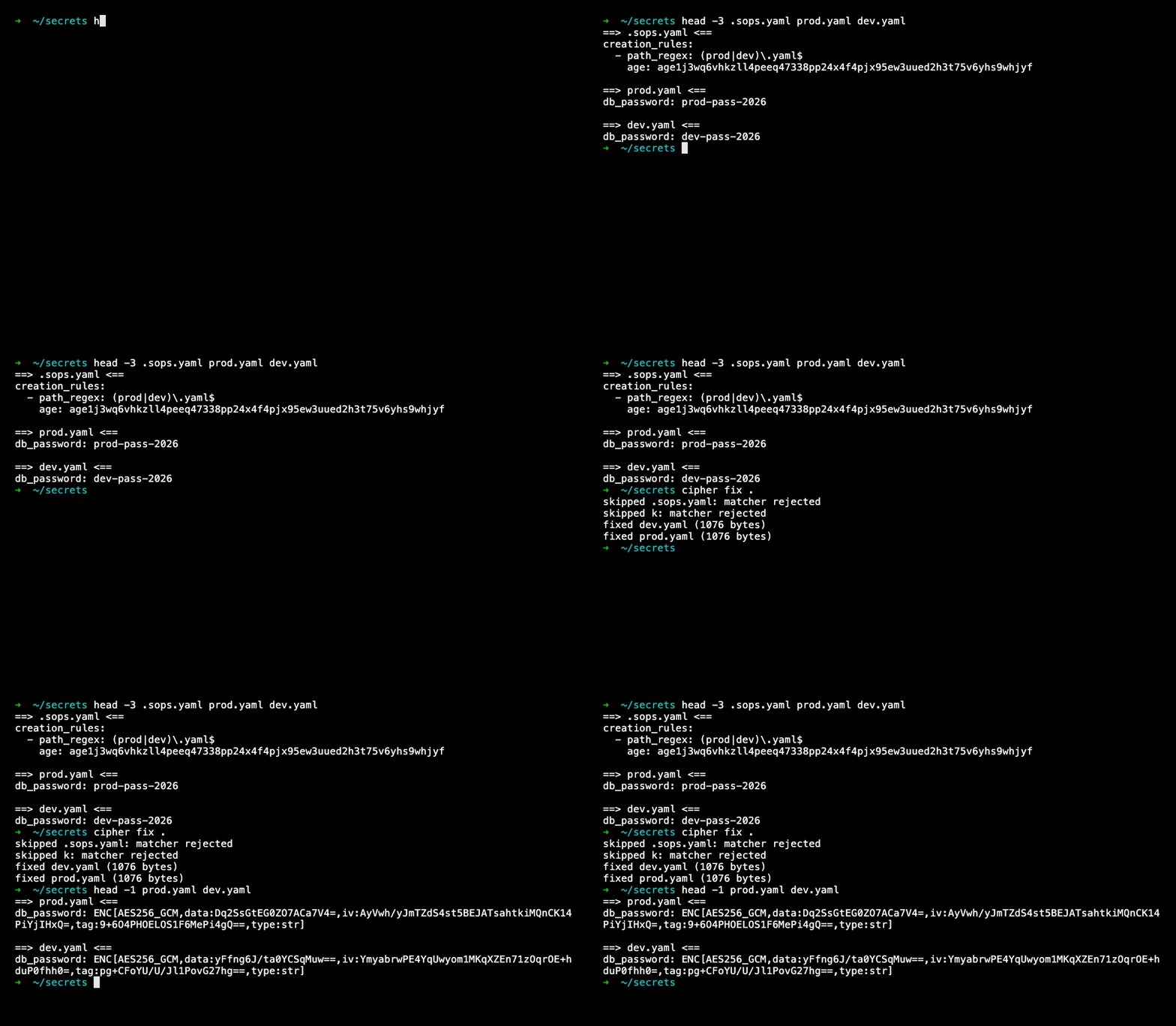
- cipher, the secrets and infrastructure work. Programmatic SOPS across six key backends, exercised end to end against real Vault Transit, KMS, and a fresh PGP keyring on every release.
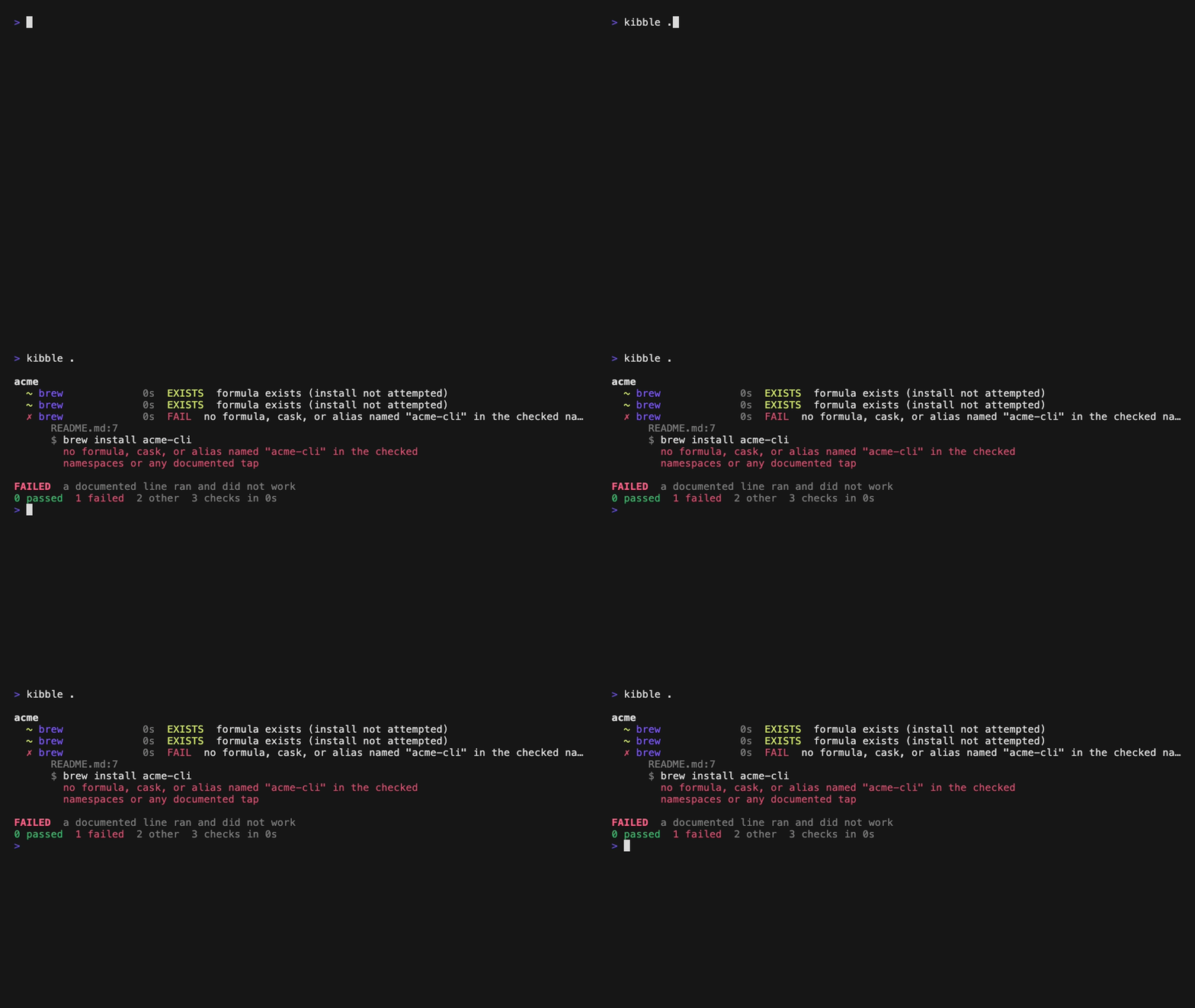
- kibble, which checks a claim nobody else checks. It runs a repository’s documented install steps in a clean container, so a broken install fails CI instead of a new reader’s terminal.
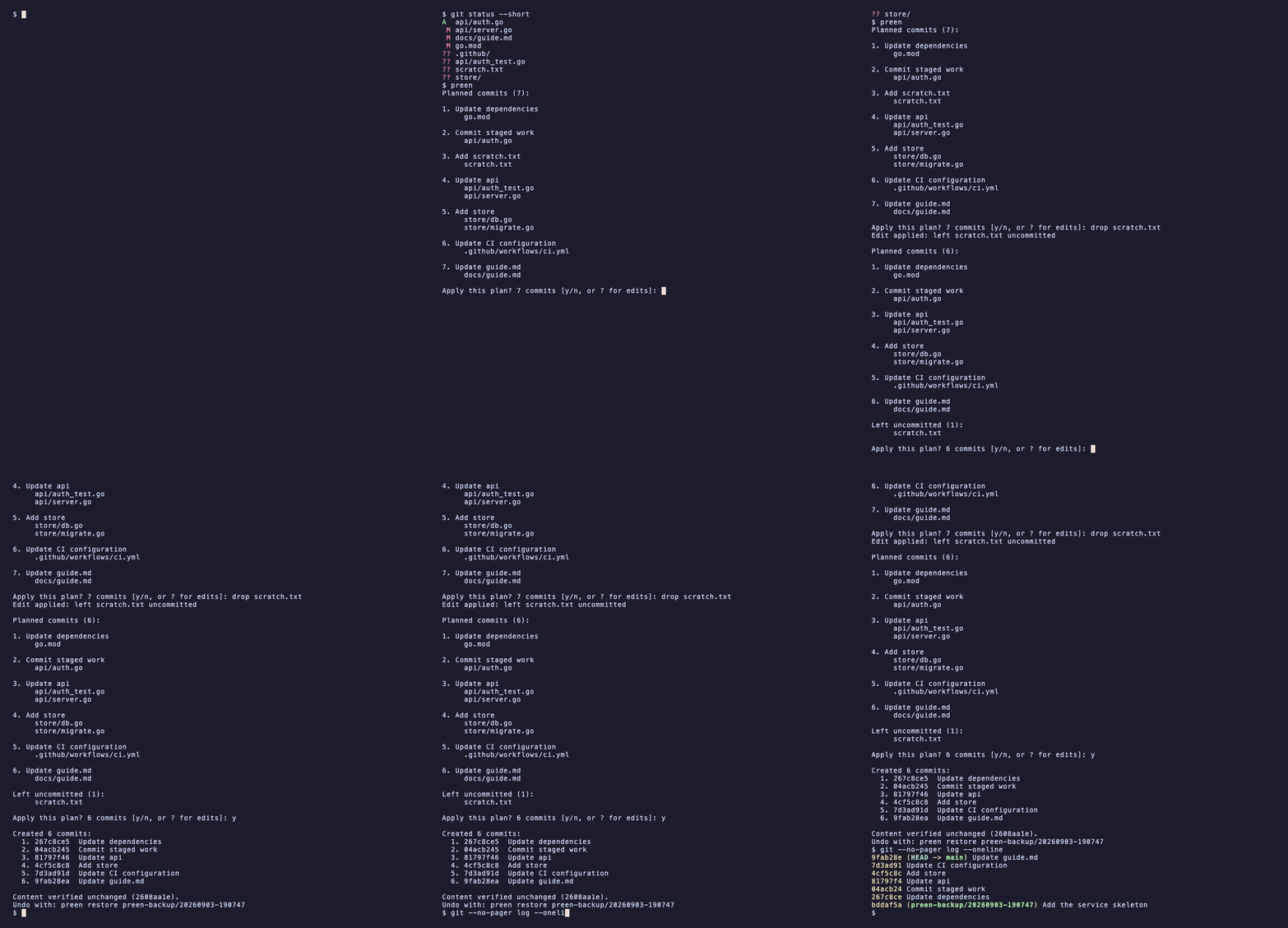
- preen, which is not allowed to lose your work. It rewrites git history, hashes everything before and after, and rolls the run back if a byte differs.
Everything below is the full set, grouped.
Platform and systems
The work closest to what I do at scale during the day.
| Tool | What it does |
|---|---|
| cipher | Programmatic SOPS for Go across six key backends, with rotation, editing, and audit. |
| fleetsweeper | Finds the Kubernetes cluster that drifted, using the fleet itself as the baseline. |
| jwtmint | A JWT library with a daemon, a controller, an admission webhook, and JWKS publishing. |
cipher
Programmatic SOPS for Go. One library and one CLI to encrypt, decrypt, rotate,
walk, edit, and audit secret files, drop-in next to your existing sops files.
Backends for age, AWS KMS, GCP KMS, Vault Transit, Azure Key Vault, and PGP. Edit
encrypted files in $EDITOR and they re-encrypt on save, rotate keys on demand or
by age, add or drop recipients without re-encrypting the payload, and walk a whole
tree in parallel. It also gives you a git pre-commit hook that blocks plaintext,
net/http middleware, and OpenTelemetry traces. Every release is exercised end to
end against real Vault Transit, AWS KMS through LocalStack, and a fresh PGP
keyring.
Source · Go
fleetsweeper
Multi-cluster Kubernetes drift detection. The cluster that drifted is the one that pages you at 3am. Fleetsweeper finds it first. It makes the fleet its own baseline, using a modified z-score across your clusters, so there are no rules or thresholds to tune. One scan returns a 0-to-100 Fleet Score, the cluster least like the rest with the exact fields that flagged it, and ranked fixes that rate a change touching ten clusters above the same change on one. It ships an optional admission webhook that denies pods deviating from the fleet’s actual norm, and folds AlertManager, Falco, Trivy, and Kyverno/Gatekeeper reports into one signal stream.
Source · Go
jwtmint
JWTs for Go, batteries included. A JWT library wrapping golang-jwt/jwt/v5
with a daemon, a Kubernetes controller, a default-deny admission webhook, and
HTTP/gRPC middleware. It adds context propagation, configurable clock skew,
multi-key rotation, JWKS publishing, revocation, and an opt-in OIDC discovery
endpoint. The threat model is written down in SECURITY.md rather than assumed,
and sign and verify benchmarks sit beside the code, across every supported
algorithm.
Source · Go
Verification and model output
Tools that check rather than produce. A stale README, a rewritten git history, and a model’s prose all make a claim about themselves, and each one is worth checking deterministically instead of taking on trust.
| Tool | What it does |
|---|---|
| kibble | Runs your documented install steps in a clean container, so a broken install fails CI. |
| preen | Splits a messy working tree into ordered atomic commits, hash checked end to end. |
| slop-chop | Strips the AI tells out of text in one deterministic local pass. |
kibble
Dogfood your docs. Kibble runs a repository’s documented install steps and examples in a clean container, as a reader with nothing installed would, so a broken install fails in CI instead of in a user’s terminal. It reads the whole doc set, not just the README, checks drift in both directions between the docs and the binary, and knows whose fault a failure is: a hardened container, a status taxonomy that separates a broken document from a limit of the sandbox, and a pinned corpus of real repositories that fails the build if its judgment ever drifts. Verifies Go, Rust, Node, and Python installs today. Ships as a CLI, a GitHub Action, and an MCP server.
Source · Go
preen
Clean commits out of a messy working tree. Point it at a pile of uncommitted
changes and it splits them into ordered, atomic commits instead of one dump labeled
“wip”, with the plan shown before anything moves. Rewriting history is not a thing
to take on faith, so preen hashes your HEAD plus every staged, unstaged, and
untracked change before the run and hashes the same set again after. The two have
to match exactly, and a single differing byte rolls the run back to the recovery
branch it wrote before it started. It can also absorb a run of unpushed commits and
redo them properly. A single Go binary, with a Claude Code plugin if you want it
inside the assistant you already use.
Source · Go
slop-chop
Strip the AI tells out of text. Paste in writing and get back something that reads like a person wrote it. A fast, deterministic rules pass swaps the giveaway characters, cuts the stock phrases, fixes spelling to one dialect, and tidies punctuation, all markdown-aware so fenced code blocks pass through untouched. An optional model pass handles the rewrites rules can’t, like reworking a sentence toward a voice you picked. Bring your own list of things to cut.
Source · Go
Applications
Software with an end user on the other side of it rather than another engineer. Different problems, same standard.
| Tool | What it does |
|---|---|
| vamoose | Approval chains that ride the calendar invite, across Graph, Google, iCloud, and CalDAV. |
| midden | A personal journal kept as plain markdown you own, searchable from the terminal. |
| cinatlas | Quick movie facts from the command line, with filming locations you can map. |
| battlesight | An interactive atlas of 13,000+ battles from 3000 BC, each tied to its sources. |
vamoose
Calendar workflows, minus the tedium. Route time off through an approval chain and fan it out to the team without touching a scheduling tool by hand. One workflow engine drives four calendar backends, Microsoft Graph, Google, Apple iCloud, and any CalDAV host, so you switch providers and change nothing. The approval rides the calendar invite itself, so there is no second tool to check. It cuts both ways: the same yes that clears your time off can fire the manager’s own follow-on steps, posting an alert, logging a note, or handing off coverage, since guards, delays, branching, and notifications are plain JSON you can read and share. Drive it from the CLI, Claude over MCP, or Slack with Approve and Decline buttons.
Source · Go
midden
A journal that lives in your terminal. A personal journal kept as plain markdown: append timestamped entries from the terminal or through a Claude Code skill, then search across years with grep, semantic recall, or a plain-language question. Your history stays in files you own.
Source · Go
cinatlas
Quick movie facts from the command line. Point it at a movie or a person and get the one answer you wanted, without opening IMDB or asking a voice assistant. It reads as “cinema atlas”: filming locations resolve to real places you can map.
Source · Go
battlesight
An interactive visual encyclopedia of human conflict, from 3000 BC to today. Pre-release and iterating fast, with breaking changes landing on every commit.
Source · Go, TypeScript